
Contents
- Start with two pieces that work on their own
- Crewneck or V-neck: check the available space
- Choose your next fitting check
- Cuffs and hem: adjust without a fixed measurement
- Three combinations to compare using your wardrobe
- Plan for taking the knitwear off
- Check the method
- Frequently asked questions
- Sources and scope
Start with two pieces that work on their own
Put on the shirt alone, sit down, reach forward as if typing, and turn your shoulders. Notice any pulling before adding knitwear. A sweater does not solve a shirt that is too tight; it may simply hide the strain in a mirror. A roomy shirt can work when the outer layer actually leaves enough space for it.
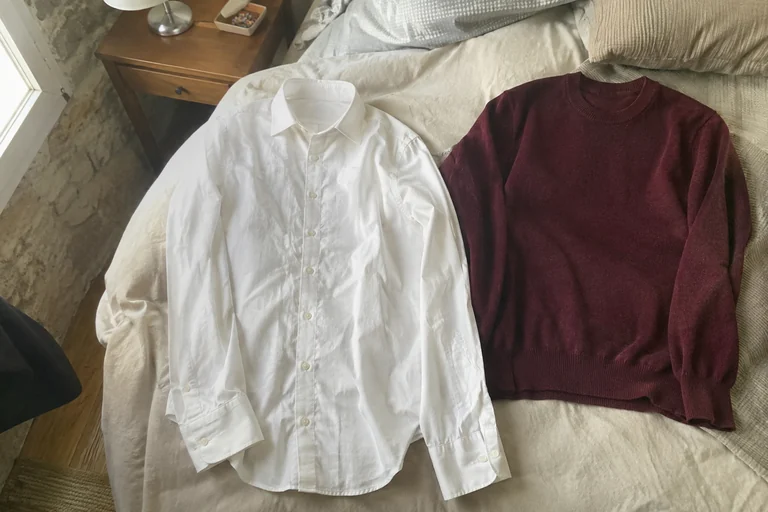
Repeat with the sweater alone. Can you put it on without pulling at the neckline? Can you bend your elbows? Combine the pieces without forcing fabric into place. A fiber name cannot predict bulk on its own: compare actual thickness, seams, and extra fabric under the arms. Our white shirt helps you choose the base.
Crewneck or V-neck: check the available space
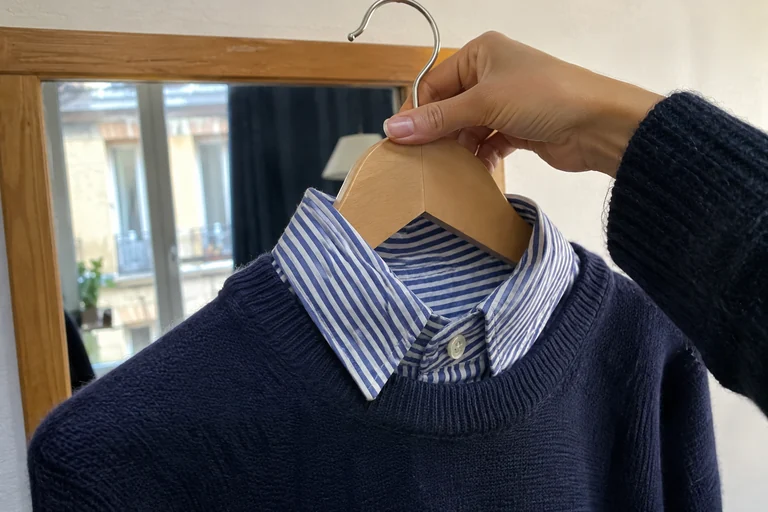
A crewneck frames a smaller part of the shirt, while a V-neck exposes more. That does not make either shape better. Lay the collar points in place without trapping them, then turn your head. If the arrangement shifts with every movement, try another opening or keep the points inside. A decorative collar can remain visible when you like that effect.
Brand styling guides do not all favor the same collar placement. Treat them as suggestions, then assess your combination. Avoid fastening the top button just to match an image when it feels less comfortable. A photo shows one position; it does not establish comfort at work or how easily you can remove the sweater.
Choose your next fitting check
| Area | First comparison | Movement check |
|---|---|---|
| Collar | Points inside or outside | Turn your head without tightening |
| Cuffs | Visible or hidden | Bend your elbows |
| Hem | Untucked or tucked | Sit without compression |
Find your approach
Which detail do you want to adjust?
Choose an observation.
Choose the closest match: the corresponding guidance will appear here.
The collar folds over
Lay the points flat
Remove the sweater, flatten the collar, then try another opening without stretching the knit.
The arms feel tight
Compare separately
Test each piece alone. If only the combination restricts you, change one layer instead of compressing fabric.
The cuffs get in the way
Check everyday movements
Type, bend your elbows, and pick up a bag. Hide or expose the cuffs according to those movements, without a required measurement.
Fabric bunches at the waist
Reduce one layer of bulk
Compare an untucked and tucked shirt without tightening the waistband. Another length may work better.
You need to remove the sweater
Plan the base outfit
Check that you like wearing the shirt alone, then plan where the removed knitwear will go.
You only want the collar effect
Distinguish an accessory
A detachable collar creates a different outfit. It does not replace a shirt when you want to remove the sweater.
 Read alsoHow to put together a harmonious outfit with what you have
Cuffs and hem: adjust without a fixed measurement
Start with the cuffs in their natural position. Compare showing and hiding them without rolling two tight layers together. If every movement requires another adjustment, reconsider the combination. Include your coat in the check: a third sleeve can turn comfortable layering into a restrictive outfit.
At the waist, check front and side views while standing and sitting. Untucked, tucked, or partly tucked: choose an effect you want to keep while moving. Do not stretch the knitwear to erase a fold underneath. Our layering lengths guide separates visible length from the room your body needs.
Three combinations to compare using your wardrobe
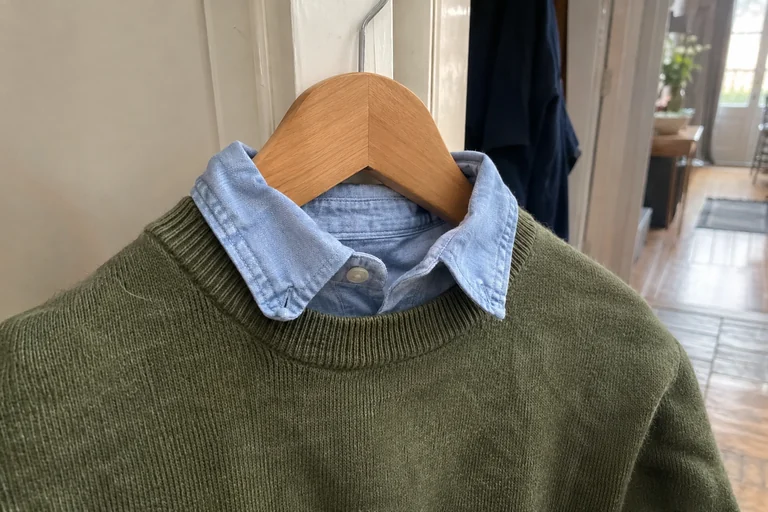
A navy sweater and a light shirt make the collar boundary easy to see. Similar shades give a quieter contrast; compare them under the same light instead of relying on product color names. A patterned shirt can show its pattern only at the collar and cuffs. These checks do not require buying white or adding a third color. Our Navy explores contrast.
Next try the full outfit with the same pants and shoes. Change only the hem arrangement or the sweater, then compare. Different framing or lighting can make one photo seem better for a reason unrelated to clothing. Keep a short note: what you like, what gets in the way, and the single adjustment to check next time.
Plan for taking the knitwear off
The shirt also needs to work alone when you plan to remove the sweater. Check its opacity in the expected light and its comfort while sitting. At 15°C, the temperature alone does not describe wind, rain, or your commute. A removable layer helps only when you can carry it and feel comfortable in the exposed base.
A detachable collar is another option when you only want the neckline effect. The French video specifically shows removable collars; it does not establish the comfort of a full shirt under knitwear. The English and Spanish examples present personal styling conventions. Their accessories, purchases, and collar rules are not requirements for our fitting comparison.
Video in English
Check the method
Quiz
Three things to check
The shirt pulls when worn alone. What should you try?
See the answer
Another fit before adding knitwear. The outer layer does not solve tension in the base.
Which comparison is useful?
See the answer
Keep the light and change one detail. A single difference makes the choice easier to assess.
Does a detachable collar replace a shirt?
See the answer
Not when you want to remove the sweater and keep a shirt. A collar effect and a base outfit serve different needs.
After choosing a combination, you can find it again in your Vestly digital wardrobe and plan another comparison using pieces you already own. An image helps compare appearance; it does not measure friction, warmth, or freedom of movement. Assess those during the real fitting, without treating a digital rendering as a size guarantee.
Check off
Before keeping this combination
0 / 5
All five checks are complete; keep useful observations for the next wear.
Band collar, loose points, or button-down: what changes?
Before adjusting a collar under knitwear, look at its construction. A band collar without points does not require a choice between tucked-in and visible points. On a folded collar, distinguish any small buttons securing the points from the button at the front of the neck. Charles Tyrwhitt’s collar guide treats button-down and collarless styles separately. That construction reference does not impose a style convention.
| Observed collar | First reference |
|---|---|
| Band without points | Look at the visible edge, not missing points |
| Loose points | Compare positions without trapping them |
| Button-down points | Identify the fastenings before moving them |
Fictional example: your shirt has small buttons at its collar points. Note their location before comparing two sweater necklines; this is different from fastening the neck button. For a business casual workplace, local dress rules remain a separate decision. black and brown are a visual comparison. A wavy neckline guide raises another question about knit fabric and care.
Frequently asked questions
Should the shirt collar sit outside the sweater?
Compare both positions without trapping the collar. Neither replaces a comfortable fitting with your garments.
How many inches should show?
There is no required measurement. Adjust collar, cuffs, and hem for movement and the effect you prefer.
Can an oversized shirt work?
Yes, when the sweater accommodates its bulk without compressing arms or waist. Check while sitting and moving.
Can the shirt hem remain visible?
Yes. Compare it with a tucked version and keep the option you prefer in the complete outfit.
Do I need a shirt-stay accessory?
Our method does not require one. Start with fit, thickness, and movement using your current clothes.
Can a photograph establish comfort?
No. It records appearance; movement, sitting, and removing the sweater need a real fitting.
Sources and scope
- Bourrienne: shirt and knitwear suggestions, in French.
- Le Minor: collar, cuffs, and hem, in French.
- Rydale: shirt and sweater layering, in French.
Brand guides read November 11, 2026; their preferences are not requirements. This editorial comparison method does not report a physical garment test by our team.