Contents
Tell three situations apart
The pull tab is the piece you hold. The slider travels along the two sides. Teeth, or a coil depending on the design, form the chain. These names help you ask about the problem you actually have rather than a different fault that happens to share the word zipper.
If the slider travels downward and opens the zipper along its path, record that movement. If the sides separate behind a slider that stays at the top, record chain separation instead. If fabric is caught in the opening, stop handling it: this guide does not teach a method for releasing trapped material.
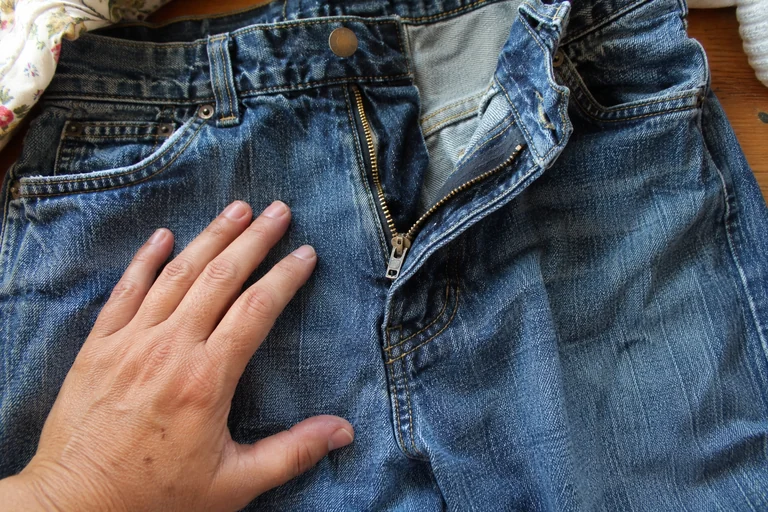
Sliders do not all lock the same way
YKK describes several families: some sliders have no lock, some lock when the pull is released, and others depend on its position. Its jeans demonstration shows one particular mechanism rather than a rule for every zipper. A lowered tab alone therefore does not prove that a lock works.
You can look at the garment laid flat, without adding a load, then note where the pull rests when you release it normally. Do not try to cause a failure to confirm one. The manufacturer’s technical manual warns that excessive force can break a lock: its industrial procedures are not home tests.
A short observation without tools
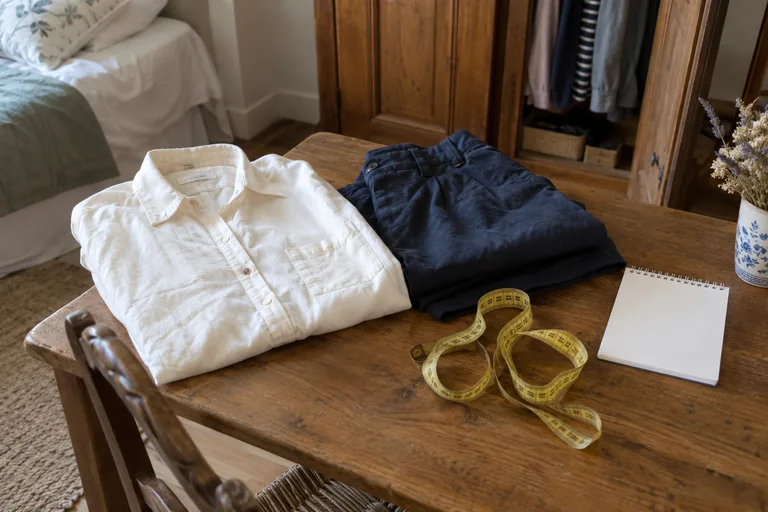
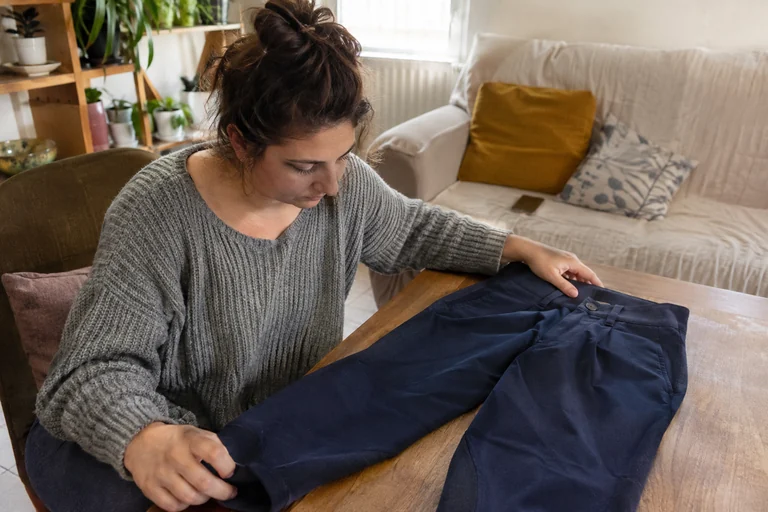
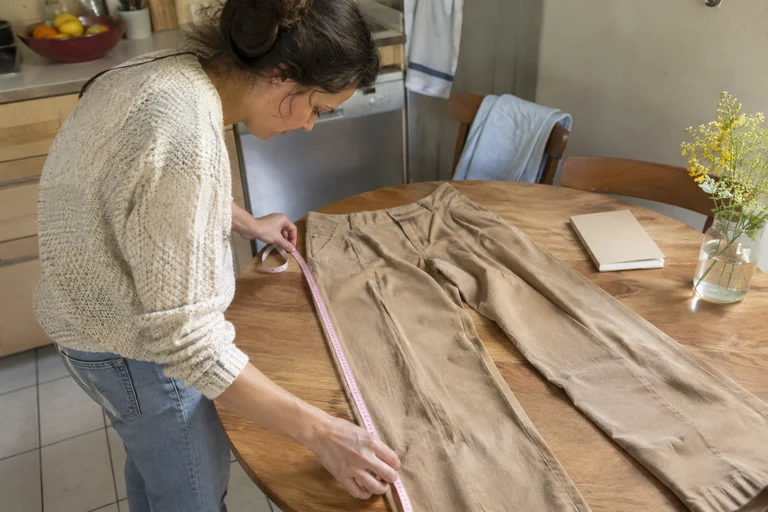
Lay the pants on a clear surface. Look for lining in the path, a visibly torn tape, or an apparently missing tooth. A close photo can help show what you see; it will not always identify a compatible replacement. Keep a picture of the whole garment as well, so the location is clear.
If the garment closes without resistance and feels comfortable, observe only ordinary use. You do not have to wear it to prove a fault. If it pulls, pinches, or worries you, choose another piece. Your body does not need to adapt to an unreliable closure, and discomfort is a sufficient reason to stop.
Compare your notes with the guide to taking clothing measurements. A flat measurement describes the garment rather than the strength of a slider. Do not infer a required clothing size or a mechanical cause from one waist measurement; those are separate questions that deserve separate observations.
Choose the next step
Find your approach
What do you see?
Choose an observation rather than a diagnosis.
Choose the closest match: the corresponding guidance will appear here.
The slider travels down
The slider travels down
Record the movement without extra pulling; ask whether this model has a lock.
The chain separates
The chain separates
Describe the opening behind the slider; distinguish it from downward travel.
Fabric is caught
Fabric is caught
Stop moving it; show the area to a repair professional.
The garment pulls when closing
The garment pulls when closing
Choose another outfit and separate comfort from the condition of the closure.
I see visible damage
I see visible damage
Photograph without disassembly; ask for a compatibility assessment.
I cannot tell what moves
I cannot tell what moves
Take an overall and close view without trying to cause a failure.
 Read alsoHow to put together a harmonious outfit with what you have
Prepare a useful repair request
Describe what you noticed, when it happened, and where the zipper sits on the garment. For example: the pants were laid flat, the slider was at the top, then it moved after you released the pull. If it happens only while worn, say so without assuming that the clothing size must be responsible.
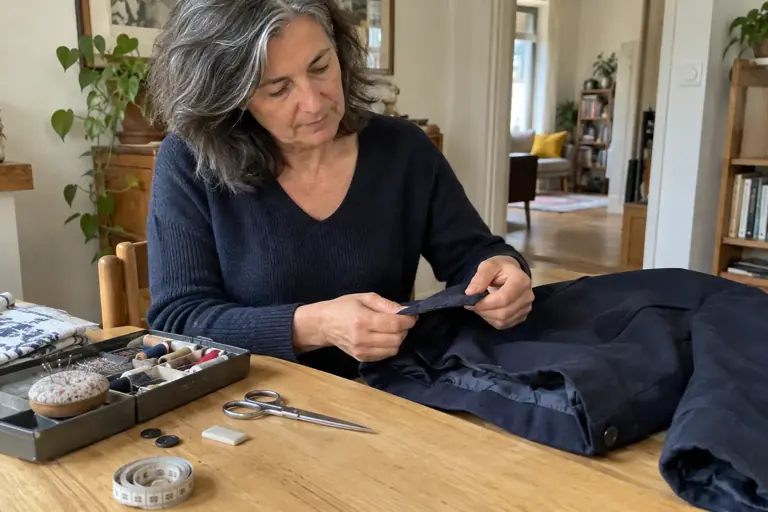
Then ask which part may be involved, whether it can be replaced, and what the work might change visually. Replacing a slider depends on construction and compatibility; a general guide cannot guarantee a solution. Clarify the proposed work before ordering it. Use organizing clothing repairs.
Tips promising a universal fix with pliers often combine different problems. This guide does not call for squeezing, glue, or products applied to fabric. Leaving the area alone also preserves useful observations for the person you consult. When shopping, consider the closure alongside other garment finishes instead of treating it as a guarantee of overall quality.
Video in English
Keep an outfit available
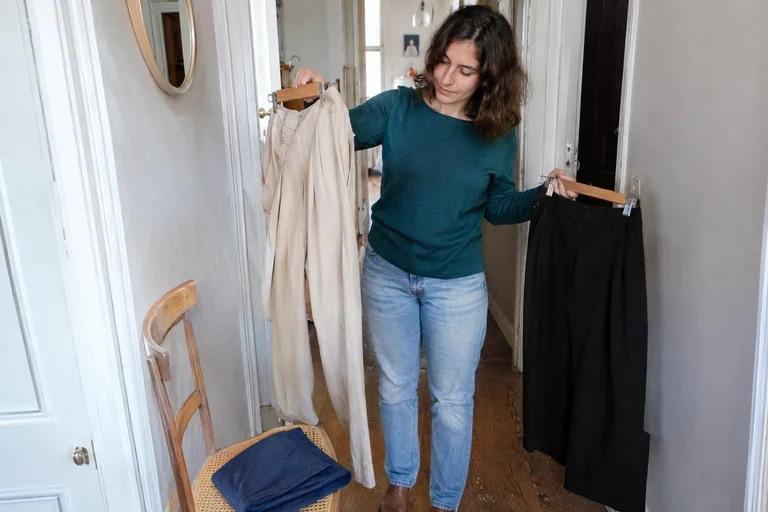
Separate pants awaiting a check from clothes ready to wear. A short note can prevent rediscovering the same issue just as you leave home. If you use Vestly to prepare outfits, keep the practical decision separate: visual comparison cannot check a lock or the strength of zipper teeth. The goal is clothing that lets you move comfortably.
Quiz
Three checks
The slider stays up but the sides open:
See the answer
Describe chain separation. Describe chain separation.
Do all pull tabs lock in a lowered position?
See the answer
No, mechanisms differ. No, mechanisms differ.
Can a photo identify every compatible replacement slider?
See the answer
No, construction also needs assessment. No, construction also needs assessment.
Check off
Before asking for help
0 / 5
These notes describe the situation without guaranteeing a diagnosis.
Frequently asked questions
Why does my zipper slide down?
The behavior can depend on slider type and condition. Observe which part moves; this page cannot diagnose your zipper.
Should I lower the pull tab?
Some mechanisms use that position and others do not. Check guidance for the model and do not force it to test the lock.
Does this always mean my pants are too small?
No. Slider movement alone does not determine size. Consider comfort, fit, and the functioning of the closure separately.
Will pliers fix every case?
No. Excessive force can damage a lock. This guide uses observation without squeezing or disassembly.
What if the zipper opens in the middle?
Describe where the chain separates and where the slider is. That differs from a slider traveling downward.
Does Vestly check zippers?
No. Preparing an outfit or comparing its appearance does not check a mechanism. Keep the repair request separate.
Sources and scope
Checked November 16, 2026. Manufacturer documentation applies to the mechanisms described. Editorial observation method; our team performed no physical zipper test. Photos generated for this article.