Contents
- Who can use this fitting assessment?
- Where does the jacket start pulling?
- How can you distinguish shoulder, back and armhole?
- Does the top underneath change the comparison?
- What should you check with the jacket open and closed?
- Could the lining or a temporary stitch be involved?
- How can you compare two fittings without mixing conditions?
- When should you ask about alterations or try another cut?
- What can the video and virtual try-on show?
- What decision should you keep after the fitting?
- Frequently asked questions
- Sources
You might like a jacket from the front but feel restricted when reaching for your bag. That observation concerns a garment in a particular situation. It does not mean your shoulders, chest or body shape need to change. Our method helps prepare a comparison before a purchase or a conversation with a tailor, without turning a fitting into a remote sewing diagnosis.
Who can use this fitting assessment?
This guide is for someone deciding between a jacket, another size and another cut. It also helps describe discomfort in an item already purchased. It does not promise to calculate an ideal size or confirm alterations from an image.
If you mainly want outfit ideas, start with our guide to wearing a blazer with your wardrobe. If your question concerns a sleeve that is too long, use our jacket sleeve-length references. Both needs can coexist, but shortening a sleeve does not create more room across the upper back.
Stop any movement that causes pain or feels blocked. The aim is ordinary comfort, rather than testing how much force the fabric can withstand. Take the jacket off to return to your normal position; do not pull on the sleeves to complete a movement that catches.
Where does the jacket start pulling?
Locate the first discomfort at rest, then during a simple movement you already make in daily life. Pulling near a button, a sleeve squeezing an arm and a back panel blocking movement describe different parts of the garment.
| What you notice | A useful comparison | What this does not establish |
|---|---|---|
| The closure pulls at the front | The same jacket, open and then closed | That the shoulders must be too narrow |
| The back feels restricted even with the jacket open | The same top, another size or cut | That simply moving a button will solve it |
| The sleeve squeezes the arm | Another sleeve or armhole, without forcing movement | That the entire jacket body lacks room |
| Discomfort appears only over knitwear | The same jacket over the thin top intended for another use | That the jacket works over every layer |
The selector covers these four situations. Its answers suggest the next thing to compare; they do not identify a seam to open. Keep an unknown answer in your notes too if you have not isolated the area.
The fitting workshop
Find the next comparison
Choose the closest situation. Explanations also remain available under each button.
The closure pulls at the front
Compare the same jacket open and closed over the same top. If the back or sleeve also feels restricted while open, keep those observations separate.
The back feels restricted with the jacket open
Compare another size or cut over the same top. Do not infer which seam needs changing from a wrinkle.
The sleeve squeezes the arm
Record the part of the arm and the movement involved. A different armhole or sleeve can change comfort without producing a universal size number.
Discomfort appears over a layer
Keep the same jacket and compare only the thin top with your intended layer. Comfort over the thin top does not establish comfort over knitwear.
How can you distinguish shoulder, back and armhole?
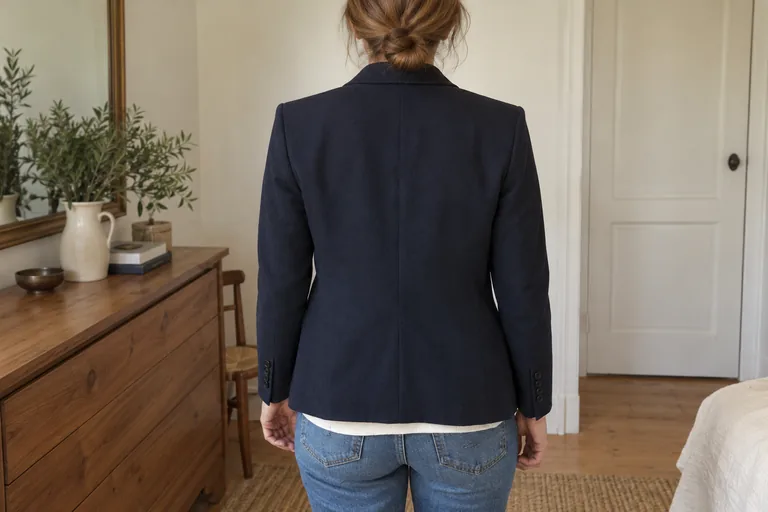
The shoulder joins the top of the garment to the sleeve; the armhole is the opening where that sleeve is attached. The back has its own width and construction. Discomfort felt in one area of your body can therefore have several causes within the garment.
For its classic jackets, Suitsupply describes fabric tension and restricted movement when a shoulder is too tight. That reference concerns this construction. It does not mean every seam must end at the same point: a raglan sleeve or dropped-shoulder jacket follows a different line planned in the cut.
Observe the jacket as designed. You may like an intentionally roomy shape; it still needs to feel comfortable for the movements you plan. Conversely, a shoulder that looks neat in a photo cannot compensate for being unable to move your arm forward normally. Our guide to women's body shapes and visual proportions covers visual effects, rather than this mechanical check.
 Read alsoA-shaped body: how to dress to balance your silhouette
Does the top underneath change the comparison?
An additional layer takes up space inside a jacket. Keep the same top when comparing two sizes. To understand a layer's effect, keep the same jacket and change only that layer.
Prepare the thin top you normally wear and, if that is your actual plan, the knitwear intended for cooler days. Do not add a thick sweater solely to push the fitting to its limit. A jacket chosen for a blouse does not necessarily serve the same purpose as an outer layer worn over chunky knitwear.
Record the context before the result: “thin shirt, jacket open, sitting at a desk” describes a use. “Size too small” is already a conclusion. This distinction helps identify what changed if another combination feels comfortable. To organize several layers, our guide to layering lengths and volumes complements the fitting.

What should you check with the jacket open and closed?
Closing adds a constraint at the front. If opening the jacket removes the pulling, that suggests something about wearing it closed; it does not automatically validate its back, lining or sleeves.
With your arms relaxed, close only the button intended by the design, without pulling the fronts toward each other. Look at the collar and area around the closure, then reopen. Repeat the same ordinary movement in both configurations, without seeking unusual range. A photo can help compare appearance, while your sensations describe wearing comfort.
You can choose to wear some jackets open. Check that they remain comfortable open over your actual outfit rather than using that choice to ignore persistent discomfort. If their intended use requires closing, keep that trial among your decision conditions.
Could the lining or a temporary stitch be involved?
The lining is part of the construction and must accommodate the intended movement. A vent still held by a temporary stitch can also affect how the jacket hangs. Those observations call for checking, rather than cutting every seam that seems restrictive.
Look inside without unpicking: identify a snag, torn lining or temporary fastening clearly identified by the seller. Ask for confirmation before removing a stitch. A construction seam and temporary thread can look similar if you do not know the garment.
Nicouline's back-width document describes a pattern adjustment. It illustrates why the back is a specific construction issue. It does not establish that the same spare fabric exists in a finished, lined and assembled jacket. Do not transfer its pattern cuts directly to a purchased garment.
How can you compare two fittings without mixing conditions?
Record each fitting's conditions before deciding. If both size and top change, you cannot attribute the improvement to a single difference. The notebook below keeps observations side by side and prepares a text file only when you request it.
The fitting workshop
Keep two fittings side by side
Nothing is saved automatically. Enter only conditions you actually observed; the file is a voluntary download to your device.
Compare the same jacket in two sizes over the same top, then another cut if the first remains uncomfortable. The label's number is not a verdict on your body. Our references for choosing between sizes help separate your preferred roominess, measurements and comfort in use.
Do not convert a shoulder measurement into a universal commercial size. Size charts do not all describe the same measurement. If measuring a garment flat, specify the exact path and compare only dimensions taken the same way; our guide to taking clothing measurements explains the distinction.
When should you ask about alterations or try another cut?
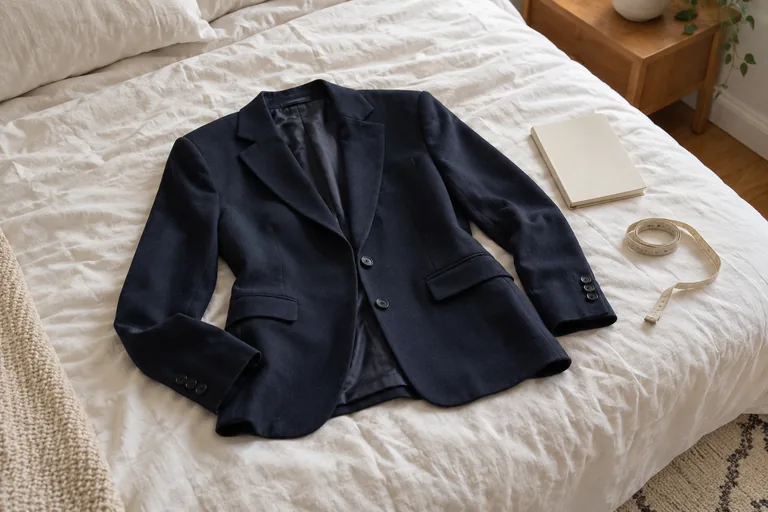
Ask for an assessment of the actual garment before relying on a shoulder, sleeve or back alteration. Available fabric, lining, pattern matching and construction limit the options. An alteration possible on one jacket may be impossible on another.
Take your observations to the tailor: the restricted area, layer worn, closure and movement involved. Ask what would change, what would remain and how the post-alteration fitting would be checked. This produces a proposal tied to your garment, rather than a general promise that every jacket can be altered.
Before purchasing, another cut may avoid immediately relying on an uncertain alteration. For an item you already own, decide after an assessment and quote without cutting it yourself. Our guide to organizing clothing repairs helps record that step and bring the garment back into use.
The fitting workshop
Before keeping a decision
What can the video and virtual try-on show?
Justine Leconte's English-language video starts with classic jacket fitting: shoulders, underarms, crossed arms and lining. Its later sections concern trousers. Use the jacket demonstration to observe movement, without turning classic tailoring references into rules for every oversized design.
A visual example from Justine Leconte officiel to compare with the steps in this guide.
Video in English
In Vestly, organizing your garments and preparing combinations can help you find the tops used in both fittings. Virtual try-on lets you examine a visual proposal; it cannot measure armhole pressure or lining resistance. Keep that limit in mind when comparing an image with wearing sensations.
Use the App Store and Google Play buttons to find the app. A jacket that appears comfortable in a representation still needs a physical fitting if that information determines your choice. Our guide to virtual try-on and a digital wardrobe distinguishes those uses.
What decision should you keep after the fitting?
Keep a simple decision tied to observed conditions: retain it for a particular use, compare another size, try another cut or request an assessment of the garment. An incomplete observation can stay pending; you do not need to invent a verdict from a photograph.
The fitting workshop
Three situations to review your decision
Read the explanation
Being able to close it does not establish enough freedom of movement.
Read the explanation
Repeat with the same top if you want to isolate the size difference.
Read the explanation
A pattern has neither the exact allowances nor the construction of an already sewn jacket.
Before putting your notes away, check that the identified jacket, top and configuration are specific enough to repeat the fitting. If you change your mind after a normal day of wear, add the new observation rather than deleting the first. Your notebook then describes actual use without presenting an aesthetic preference as a body-shape obligation.
Frequently asked questions
Will a tight jacket stretch out?
Do not rely on guaranteed stretching. The fabric, lining and construction can restrict movement. Compare another size or cut before keeping an item that already feels uncomfortable.
Can an open jacket still be too small?
Yes. Opening releases the front but does not necessarily create more room at the back, arm or armhole. Check those areas over your usual top.
Must the seam always end at the shoulder?
That reference applies to some classic constructions. A dropped shoulder, raglan sleeve or oversized cut follows a different line. Compare the intended design with comfort in use.
Can every jacket be widened at the shoulders?
It depends on the garment, seam allowances and construction. Ask a tailor to examine the actual item; a pattern-adjustment tutorial does not guarantee the same alteration on a finished jacket.
Should I go up a size?
Try it with the same top, then compare the closure, sleeves and back. A larger size is not an automatic solution if the cut still does not suit how you plan to wear it.
Is a photo enough to check ease?
A photo captures one moment, rather than the sensation or full useful movement. It can support your notes but cannot replace a real fitting with gentle movement.