Contents
- Before choosing hanger material, consider what it needs to hold
- For a jacket, check the shape and width together
- Shirts and blouses: a surface that won’t snag
- For pants, also check the crease the hanger creates
- Knitwear is often better stored folded
- Wood, plastic, metal, or velvet: compare the actual hanger
- Leave enough room to take out each garment
- Try a few garments before buying a set
- Frequently asked questions
- Sources and references
To choose your hangers, start with the garment: how it’s constructed, its weight, and which areas can support it. A woven jacket needs support that suits its shoulders; pants can rest on a bar or hang from compatible clips; a knit sweater is generally stored folded. Only then compare the hangers you already have with the space in your wardrobe.
You don’t need to replace every hanger to get a perfectly uniform look. Start with the garment that slips, develops bumps, or is hard to take out. The right choice should preserve its shape and make it easy to take out and put back. This guide covers everyday garments in good condition; vintage, very delicate, or heavily embellished pieces deserve tailored advice.
Before choosing hanger material, consider what it needs to hold
Lay the garment on a clean surface and examine it. Is it a woven fabric that holds some structure, or a stretchy knit? Do the shoulders have a seam, padding, or a dropped sleeve? Does the brand provide garment loops for storage? Check its condition, too: a weakened seam changes the choice even if the garment seems lightweight.
This helps you avoid deciding how to store a garment based only on the word “wool.” A woven coat and a knitted cardigan can contain the same fiber yet need different support. Woolmark recommends shaped or padded hangers for woven wool garments, and gentle folding for knits. Use this as a guide to construction, alongside the care instructions for your garment.
The hanger doesn’t replace garment prep. Empty the pockets, remove detachable heavy accessories, and don’t put a damp garment in a cramped closet. To decide how to care for it, check the symbols on care labels. If care instructions are missing for a particular item, ask the brand or a professional instead of choosing a method at random.
Find your approach
Which type of hanger should you check first?
Choose the item you have in front of you.
Choose the closest match: the corresponding guidance will appear here.
Woven jacket or coat
Support the shoulders
Try a sturdy, contoured hanger that’s wide enough for the item. Check its support and strength, then empty the pockets.
Shirt, blouse, or straps
Prevent slipping and snags
Choose a smooth surface with no sharp edges; if needed, test a suitable coating or notches. The fabric should stay relaxed.
Pants or skirt
Check the bar and clips
A smooth, thick enough bar may support a fold; covered clips can be tested on a sturdy area. Check for marks before using them more broadly.
Knit sweater or cardigan
Set up folded storage
Set aside an accessible shelf or drawer. Gently fold a dry item instead of hanging it by the shoulders or crushing the stack.
For a jacket, check the shape and width together
A structured jacket should rest on a hanger that follows its shoulder shape. Try a contoured hanger with rounded ends and enough surface area to support the shoulders. Look at the jacket from the front and back: the garment shouldn’t be pulled toward the sleeves or rest on two points that concentrate the pressure. Strength matters more than a hanger’s luxurious look.
Don’t choose a one-size-fits-all width based on your clothing size. Cuts, dropped shoulders, and armholes vary. A shoulder seam can help you assess a classic jacket, but it’s a less obvious guide for a raglan sleeve. Compare the hanger with the actual garment instead of automatically matching a retail size to a few centimeters.
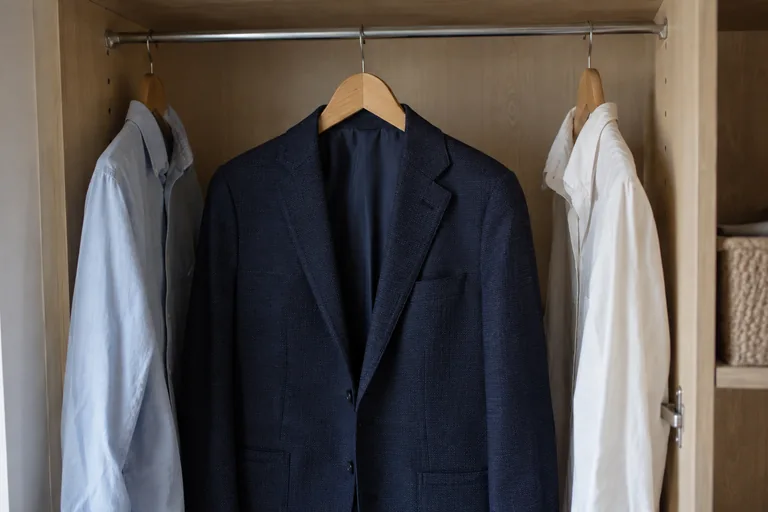
Hang the jacket, let it settle, and check how it falls. If the hanger bends, one end pushes against the top of the sleeve, or the shoulders remain poorly supported, try another style. There’s no need to pull the fabric to make it fit the hanger. For a coat, find the steps to take when you get home in our guide to caring for it between cleanings.
Shirts and blouses: a surface that won’t snag
For a lightweight shirt, a thinner hanger may work, as long as it supports the shoulders and stays rigid under the garment’s weight. Gently run your hand over the empty hanger: a burr, splinter, metal joint, or loose hook can snag fabric. Check the contact points before hanging a delicate fabric; a damaged finish needs a suitable repair or a different hanger.
If a blouse slips, a nonslip surface or notches may help. They still need to suit the straps and fabric. Don’t force a strap into a notch that’s too narrow. A flocked hanger should be clean, intact, and dry; test it with a light-colored garment instead of assuming all coatings are the same.
Some tops have inner hanging loops. They can help distribute weight if the garment’s construction and the brand’s care instructions allow it. Don’t confuse them with decoration or ties meant only for packaging. If a heavy dress pulls noticeably on thin straps, choose storage that offers more support or ask for advice.
 Read alsoWomen’s capsule wardrobe: a list of essentials and how to choose yours
For pants, also check the crease the hanger creates
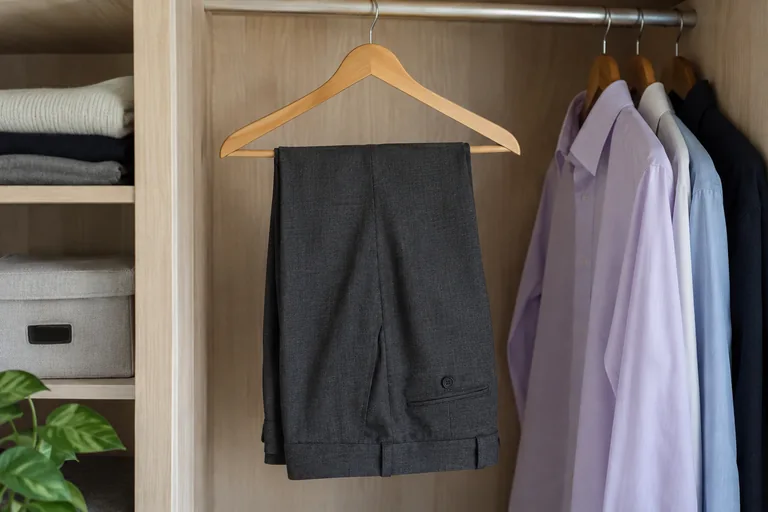
A horizontal bar lets you store folded pants, but it should feel smooth and suit their thickness. Drape the legs without twisting them, and check where the crease falls. A very thin bar can leave a pronounced mark. For pants with a crease, align the existing lines instead of making new ones just to fit them in your closet.
A visual example from Katherine Lawrence to compare with the steps in this guide.
Video in English
Clips may work for a skirt or some pants, depending on how they’re made. Choose clean, covered contact surfaces without harsh edges. Test on a sturdy area, without crushing embellishments or a delicate seam. If marks appear or the clip pulls on a small area, change the support. The quality of a garment’s construction can also be seen in its seams and fastenings.
Knitwear is often better stored folded
For a knit sweater or cardigan, start by folding it so the whole garment is supported. A heavy garment hung by the shoulders can stretch at the pressure points. Fold it gently without pulling on the sleeves, and place it in a short stack or an easy-to-reach drawer. The knit should be completely dry before you put it away here.
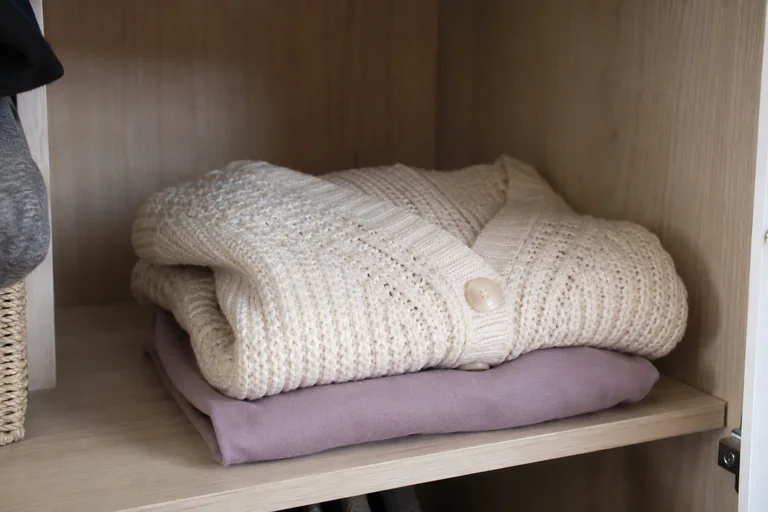
The Canadian Conservation Institute recommends avoiding hanging knits and many fragile, heavy, or bias-cut textiles in heritage collections. Its methods are designed for conservation, not everyday closet use. Here, we’re following the principle of support and taking care with a fragile piece, without turning your closet into a museum storage room.
If your drawers are deep, don’t cram the knit at the back to free up hanging space. A container that’s easy to pull out or a visible shelf may work better. Our guide to organizing a deep closet covers how to reach the back. For washing and drying, go back to the guide to wool or cashmere sweater and, above all, follow the garment’s care instructions.
Wood, plastic, metal, or velvet: compare the actual hanger
The material name doesn’t tell you everything about a hanger. A wooden hanger may have a rough finish; a plastic one may be rigid or bend; a metal hanger may be wide and padded, or very thin. Look at the shape, how it holds up under weight, the joints, and the contact points. Compare two models with the same garment, without starting from an absolute ranking.
| What you notice | What to check next |
|---|---|
| The hanger bends | A sturdier hanger suited to the weight |
| The shoulders rest on a pointed edge | A rounder shape and a suitable width |
| The garment slips | The surface, notches, or another way to store it |
| A clip leaves a mark on the fabric | Its pressure, padding, and where it grips |
| The hanger snags | An intact finish or replacing it |
Very thin hangers from the dry cleaner aren’t always suited to storing a heavy garment for a long time. Check their condition, shape, and any marks before reusing them. You can ask your dry cleaner if they take them back. A preference for matching colors can come second: different hangers may work better for different garments.
Flip cards
Four observations that change your choice
The shoulders are pushed toward the sleevesFlip
Try a different width or curve. Don’t pull the garment to make it fit the hanger.
The blouse falls to the bottomFlip
Check the contact points and intended fasteners. A suitable coating may help, but it should stay clean and intact.
The cardigan’s weight rests on two small supportsFlip
Make folded storage easy to access. The space gained in the closet isn’t worth putting constant strain on the knit.
A new crease line appears on the pantsFlip
Reposition them or change the bar or clips. The hanger should suit the fabric and how you wear the garment.
Leave enough room to take out each garment
A slim hanger can free up a little space, but it won’t solve a closet so full that you have to pull to get a shirt out. Try this: take out a garment, unhook it, then put it back. The garments beside it should stay within reach. If it gets stuck, clear some space, rearrange the categories, or move garments that are better stored folded.
Think about height too. A dress dragging on a shelf or pants wedged against a box need a different spot, even with a good hanger. Don’t overload the rod, and follow your furniture’s weight limits. Avoid setups that make you pull a heavy load down from above your head or stand on a chair to get an everyday outfit.
To take another look at everything, the guide to organizing your closet rounds out this choice of hanger. In a shared space, assign clear zones instead of mixing everything along the same section of rod. The shared closet offers practical guidelines. A solution that’s easy to maintain is worth more than a perfectly aligned photo on day one.
Quiz
Did I choose the right factor?
Two garments contain wool. Should they be stored the same way?
See the answer
No, you also need to consider construction and care instructions. A woven coat and a knit cardigan put different demands on their hangers.
A lightweight jacket has two bumps on a stiff hanger. What should you check?
See the answer
The shape and width of the supports, then how the garment sits. Stiffness alone doesn’t guarantee a good fit at the shoulders.
The closet is full despite having slim hangers. What’s a useful test?
See the answer
Take a garment out and put it back without forcing it or moving all the others. Storage should stay practical. Reorganizing may help more than adding hangers.
Try a few garments before buying a set
Gather the hangers you have and choose three different garments—for example, a jacket, a lightweight top, and a pair of pants. Note the issue with each one, then try an existing hanger that seems suitable. Check them again the next time you wear them: has the fabric slipped, developed a mark, or changed shape? This check can’t guarantee the garment will stay in good condition; it helps you spot a specific mismatch.
If you still need to buy one, start with the need you observed: wider support, a smooth finish, or better-fitting clips. Check the dimensions and product details. A quick trial can confirm it works before you buy a set. Keep the hangers that are still useful, and ask about a take-back option for the ones you no longer need instead of replacing everything by default.
Check off
My storage test
0 / 5
Your test is ready. Keep the solution that works for this garment and change only what’s still causing a problem.
Storage works best when you wear the garments you can reach. In Vestly , photograph your clothes to find them in your digital wardrobe, put together combinations, and use the planner. The app helps you create looks with what you own; you still need to check each garment to choose a physical hanger. Then find tips for plan your outfits for the week.
Frequently asked questions
Should you buy only wooden hangers?
No. Check the actual hanger, its shape, finish, and how well it holds up under the garment. Wood alone doesn’t guarantee the right width or an undamaged surface. A different hanger may work for a lighter piece.
What width should you choose for a jacket?
Test the fit on the garment. The ends shouldn’t push into the sleeves or concentrate the weight on two points. A standard seam can help you assess the shoulder fit, but cuts vary; there’s no single width that works for every jacket.
Can you hang a sweater to save space?
Folded storage is a sensible starting point for knitwear, especially heavy pieces. Set aside an easy-to-reach spot instead of hanging it by the shoulders. If the brand recommends another method for its piece, follow its instructions.
Do clips always leave marks?
It depends on the design, how it supports the garment, and the fabric. Try padded clips on a sturdy area and check the result. If a mark appears or a seam is under strain, adjust the placement or storage method.
Do all hangers need to match?
A uniform row can look pleasing, but the hanger should suit the garment first. You can save thicker styles for jackets, use others for lightweight tops, and keep knitwear folded. Easy access matters as much as a neat row.
Sources and references
- Woolmark, caring for wool : tell woven fabrics from knits and prepare them for storage.
- Canadian Conservation Institute, basic textile care : textile support and the limits of hanging; heritage context differs from an everyday wardrobe.
- HangerLab, hanger shapes for different garments : the manufacturer’s guidance on shoulders, surfaces, and clips.
- Katherine Lawrence · Clothing Hanger Review | Hangers 101. Video selection checked October 17, 2026.
Sources consulted October 10, 2026 UTC. Suggested placement checks are editorial guidelines: garment instructions and furniture limits take priority.