Contents
- White, off-white, ivory, ecru: a guide to the shades
- Compare two garments, not two labels
- Make the difference feel intentional with texture
- Choose where to place the brightest white
- Check the shades where you’ll be
- Check opacity and movement
- Complete the outfit with accessories you already own
- Care for white and ecru to preserve their shades
- Frequently asked questions
- Sources and references
To pair white and ecru, compare the garments in daylight, look at their textures, and embrace a visible difference instead of trying to find two nearly identical whites. Your look can bring together crisp white, soft cream, and familiar accessories. What matters is that you like the shades together and that the clothes work for your day.
Your shirt looks white in your closet. Next to ecru pants, it suddenly looks much brighter, while the pants seem warmer. You wonder whether the difference works or just makes the outfit look mismatched. There’s no single answer: you can make the contrast look intentional and clear.
White, off-white, ivory, ecru: a guide to the shades
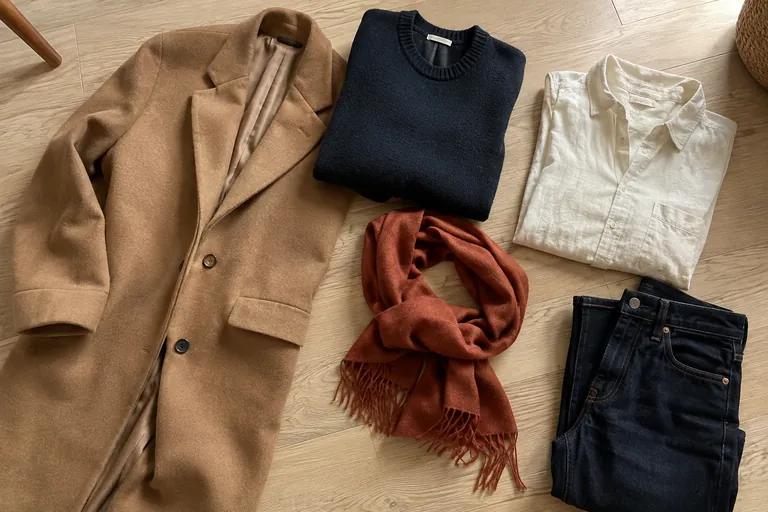
These names describe general tendencies, not standardized colors. Optical white is a very crisp white, often presented as the brightest. Off-white is a slightly tinted white that leans gray or beige depending on the manufacturer. Ivory has a creamy, warmer tone. Ecru is the natural color of an unbleached fiber, often a light beige.
These guidelines explain why two garments sold as “white” may not look alike. They don’t replace comparing them in daylight: the same piece can look warmer or cooler depending on the lighting and fabric.
Compare two garments, not two labels
Take out both pieces and place them side by side. A garment sold as off-white may look grayer than another called ivory; brand names don’t make up a shared color chart. Notice what you see without immediately trying to classify each piece as warm or cool.
Move near a window with soft, indirect light. A very yellow lamp can make the shades look artificially similar; cool light can create a different impression. You don’t need any special equipment. Simply taking the clothes out of your dark closet makes the comparison more useful.
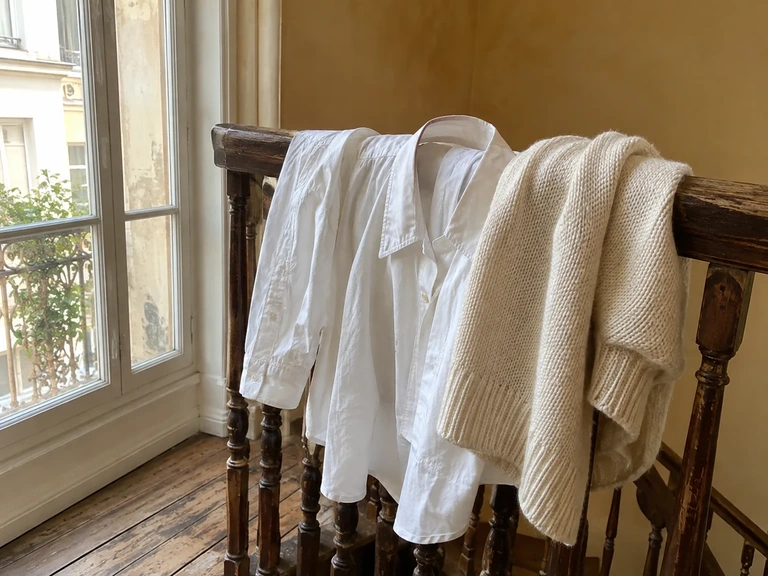
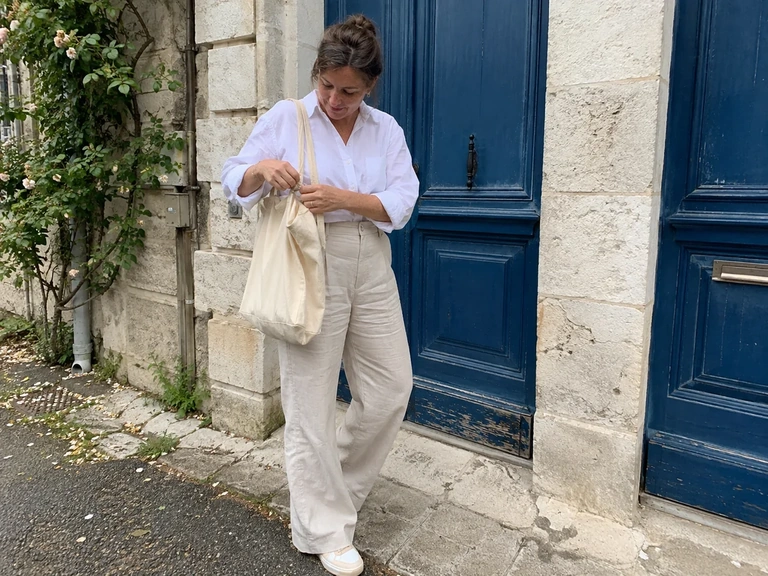
Then ask yourself whether you like the difference. Ecru pants may look distinctly warm next to a white shirt; that contrast can give the outfit its character. If it bothers you, you can change one piece, but you don’t have to think of ecru as white that has lost its crispness.
Make the difference feel intentional with texture
A cream knit with a textured white skirt reads clearly as two separate pieces. The knit’s texture, the skirt’s drape, and their shades all shape the result. You can play with the difference instead of trying to hide it.
By contrast, two very similar smooth cottons can make the pairing feel a little off. Before ruling them out, try creating some separation: wear the shirt open over a top, add a practical belt, or change how much of each layer shows. A small adjustment may be all it takes to make the outfit feel more cohesive.
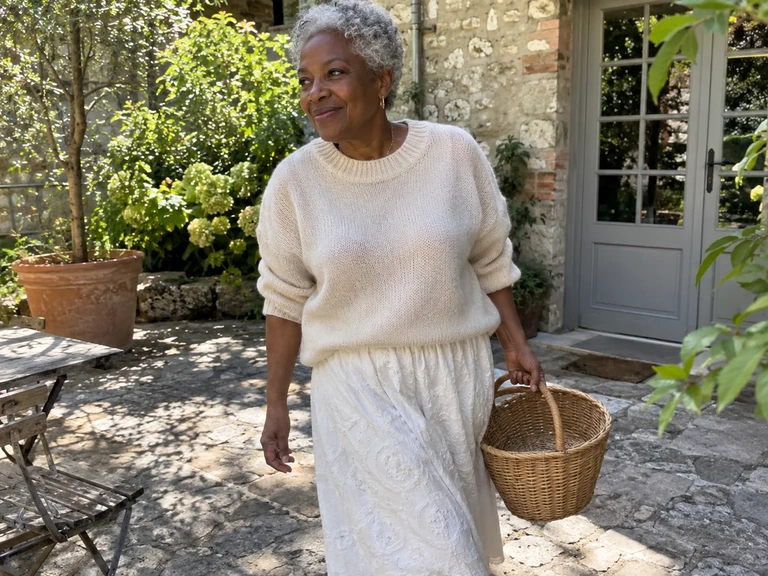
You don’t need texture everywhere. If the sweater is chunky, a simpler piece underneath may work for you. Let the contrast in texture serve your preference, not an obligation to be original. To place this experiment in a wider color palette, see the guide to pairing clothing colors. For an outfit made entirely of similar shades, the guide to the monochrome outfit offers more pointers.
Choose where to place the brightest white
The brightest white often draws your eye in the outfit. You can place it on a shirt, shoes, or a small detail. Try shifting where it appears using what you already own. An off-white jacket over a white shirt creates a different balance than a white jacket over a cream top.
This is about how the outfit is put together. You don’t need to choose where to place a color to correct any part of your body. Instead, notice which piece you want to highlight and how you feel in the whole look.
If you wear a white shirt, start with the way you usually wear it. Tuck it in, leave it untucked, or wear it open, depending on your comfort and its cut. The guide to wearing a white shirt offers more pairings; here, the focus is on how it looks next to off-white.
 Read alsoCasual chic: the simple formula for looking polished every day
Check the shades where you’ll be
An outfit can look very different in a bedroom and in a restaurant lit by warm lamps. You can’t control every light you’ll encounter during the day, but you can check your pairing under two kinds of lighting you’re used to. This test helps you see whether you like the variation instead of being caught off guard by it.

If you’re putting together an outfit for an important photo, trying it on at the location can help when that’s possible. A phone photo can show a general impression, but automatic processing can also alter whites. So use what you see in person as your main reference.
Don’t turn this check into a search for perfection. Clothes are worn under changing light. You can decide you like the variation, or that it’s subtle enough not to worry about. An outfit shouldn’t need constant monitoring to feel good.
Check opacity and movement
With light-colored clothes, it’s worth trying the fabric on. Check how see-through it is while standing, sitting, and moving around. The fabric may stretch around a pocket, seam, or fold. Check the areas that matter to you under representative lighting, rather than relying only on the garment laid flat.
Choose your underwear based on the result you want and your comfort. If you’re wearing a white top on its own, the guide to choosing an opaque white T-shirt covers the opacity checks. Compare the options you have instead of following a one-color-fits-all rule. A lining or another layer can also change the look, but add one only if it truly helps you.

The hem of light-colored pants also needs to work with your shoes. If it touches the ground, that’s a practical issue before it’s a style one. Try on the actual pair you’ll wear and take a few steps. Also think about where you’ll sit or set down your bag, without giving up a color you love for fear of every possible mark.
Check off
My white and ecru try-on
0 / 6
Your try-on is complete: keep the combination of shades, fabrics, and accessories that makes you feel comfortable.
Complete the outfit with accessories you already own
Brown, black, or colorful shoes can go with white and ecru. You can also keep your shoes light. Start with a pair suited to what you’ll be doing, then see how it looks. Your bag doesn’t need to match the exact shade of your pants.
If you want a very soft look, choose subtle contrasts. If you like a sharper accent, a dark accessory might work for you. Try one change at a time to see what you like. The casual chic style can provide context for these combinations without requiring a whole new outfit.
In Vestly, save the looks built around your light-colored pieces so you can find the combinations you truly liked again. The app helps you put together looks from your wardrobe; trying them on is still the best way to check similar shades and transparency.
Care for white and ecru to preserve their shades
White and ecru don’t always react the same way to washing and drying. Read the care label before every wash: it shows the temperature, the recommended level of agitation, and any restrictions, especially about bleach. Separate pieces with noticeably different shades to prevent color transfer.
Let garments dry completely before putting them away, since a piece that’s still damp can develop an odor or a mark. Our guide to understanding clothing labels explains the symbols, and the guide to organizing laundry sorting helps you sort your loads.
Watch a practical example
A visual example from Some Notes on Style to compare with the steps in this guide.
Video in English
Frequently asked questions
Can you wear white and ecru together?
Yes. A clear difference, highlighted by textures or how you distribute the pieces, can create a pairing you love. Compare the clothes you actually own instead of looking for a blanket rule.
How can you avoid a dingy-white look?
Try a more noticeable difference between the shades or fabrics. Also check the garment’s condition. If it needs care, follow its label; if its color is naturally ecru, it doesn’t need to become white.
Do the accessories need to be light-colored too?
No. A dark pair of shoes or a colorful bag can complete the look. First choose what works for your day, then check the whole outfit in the mirror.
What’s the difference between off-white and ecru?
Off-white is white with a slight tint, often gray or beige. Ecru refers to the natural color of an unbleached fiber, usually a light beige. The easiest way to tell them apart is to compare them side by side in daylight instead of relying on retail color names.
Can you pair white and ecru with jeans?
Yes. Dark jeans create a clear divide between the top and bottom, letting the light shades stand out. Raw or faded denim can also work with ecru, as long as its color and texture go with the rest of the outfit.
Sources and references
- Vestly, how it works and looks, accessed September 30, 2026.
- These pairings are editorial suggestions; check the shades on the actual garments.